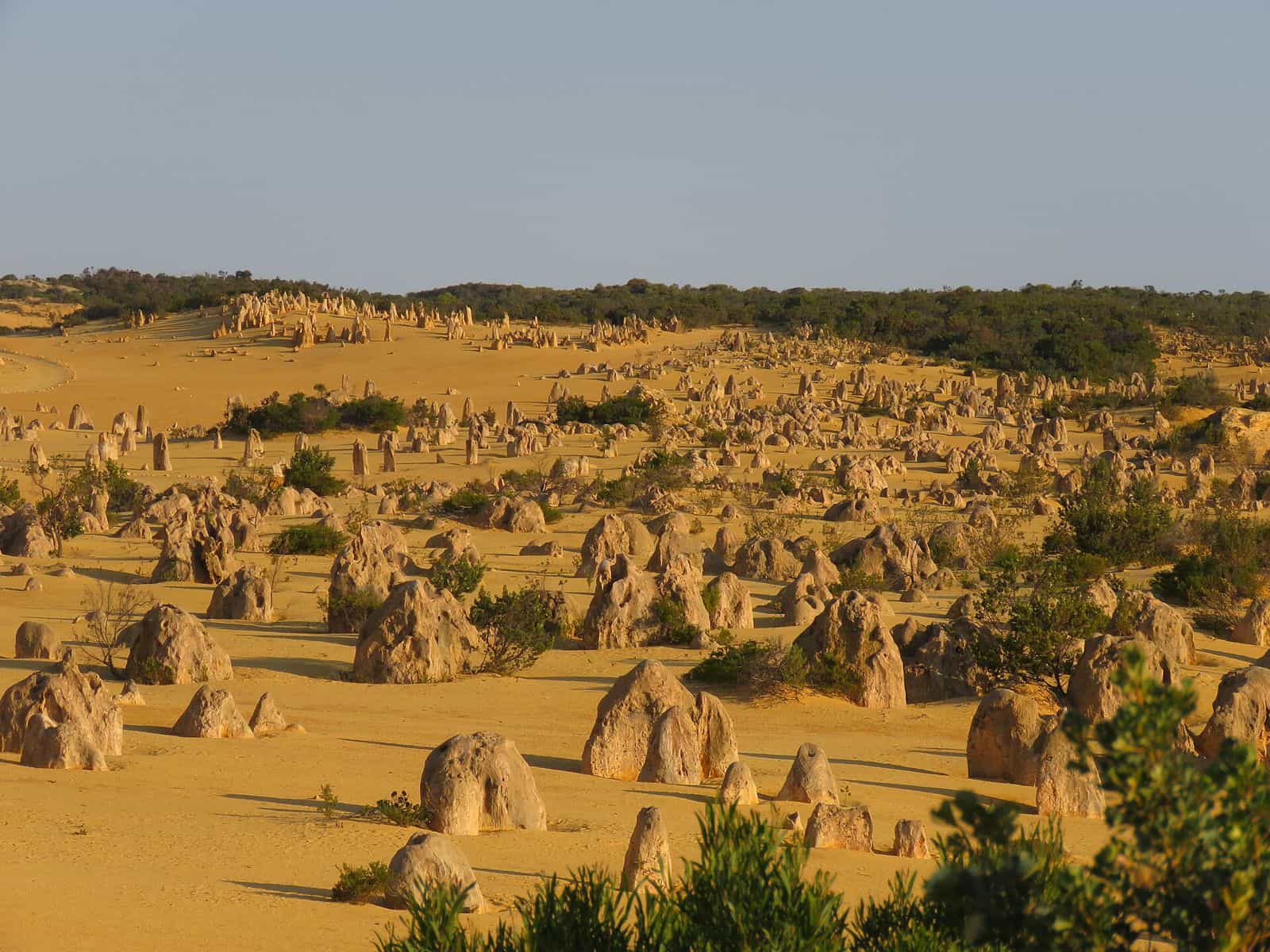
The Pinnacles look like nowhere else near Perth. In Nambung National Park, thousands of weathered limestone pillars rise from bright yellow sand, some no taller than your knee, others well above head height. At sunrise and sunset, the shadows stretch long and the colours glow. It is a long day trip, but for many visitors, it is one of the most memorable sights in Western Australia.
3.5 m
Tallest pillars
Many are much smaller
Nambung
National park
Near Cervantes
2+ hrs
Drive from Perth
Via Indian Ocean Drive
What are the Pinnacles?
The Pinnacles are limestone formations. Scientists have proposed several explanations for how they formed, but in general, they are the remains of limestone that formed beneath the sand dunes and was later exposed as the softer sand blew away. The landscape is constantly changing as the wind shifts sand around and uncovers or buries pillars.
Getting there
Most visitors drive north from Perth along the Indian Ocean Drive, a scenic coastal road. Allow at least two hours each way, plus stops. If you prefer not to drive, many tours run from Perth. They often include sandboarding on the dunes at Lancelin, lunch, and a visit to the Pinnacles at sunset.
| Option | What to know |
|---|---|
| Self-drive | Indian Ocean Drive, about 2+ hours each way |
| Day tour | Often includes Lancelin dunes and lunch |
| Overnight | Stay in Cervantes for sunset and stargazing |
Exploring the Pinnacles
The Pinnacles Desert Discovery Centre
Start at the discovery centre, which explains the area's geology, plants and animals. There are facilities and a shop.
Walk and drive
A walking trail leads through the pinnacles from near the discovery centre, and a scenic drive loop lets you explore by car with stops along the way. Walking is the best way to appreciate the size and variety of the pillars. Stay on marked paths and do not climb the formations, which are fragile.
Sunset and stargazing
Sunset is the most popular time to visit, with golden light and long shadows. After dark, the lack of light pollution makes the area great for stargazing. Check whether the park is open after sunset and plan your drive home carefully, because wildlife is active at dusk and at night.
Nearby attractions
Lake Thetis, near Cervantes, has stromatolites, living rock-like structures formed by microbes. A boardwalk lets you see them.
Cervantes is a small fishing town known for rock lobster, with beaches and accommodation.
Lancelin is famous for its white sand dunes, a popular place for sandboarding.
Wildflowers
In spring, the area around the Pinnacles and the drive north can be covered in wildflowers. Combine a Pinnacles trip with wildflower spotting from late winter into spring.
Safety tips
Pinnacles checklist
0 of 6 done
Ticks are saved in this browser only.
When to go
Spring (September to November) is mild and brings wildflowers. Autumn is also pleasant. Summer can be very hot, so visit early or late. Winter days are cooler and sometimes wet but can be beautiful.
Suggested itinerary
Leave Perth early and drive north along the Indian Ocean Drive. Stop at Lancelin for sandboarding, then continue to Cervantes for a seafood lunch and a visit to Lake Thetis. Visit the Pinnacles in the late afternoon, stay for sunset, then drive back carefully or stay overnight in Cervantes.
Is it worth the drive?
Yes, if you have a full day. The Pinnacles are unique, and the drive north along the coast is scenic. If you are short on time, a tour takes care of the driving.
Respect the park
Nambung National Park protects a fragile landscape. Stay on marked trails, do not climb the pinnacles, take all rubbish home and follow park rules. Pets are generally not allowed in national parks.
Facilities
The discovery centre has toilets, a shop and information. Facilities elsewhere in the park are limited, so bring water and food. Cervantes has fuel, food and accommodation.
Photography tips
Visit at sunrise or sunset for the best light. A wide-angle lens captures the scale of the landscape. Include people in your photos for scale. At night, a tripod is useful for stars.
With children
Children usually love the Pinnacles. The walking trail is fairly easy, but bring plenty of water and sun protection, and keep children on the paths.
Accessibility
Some paths near the discovery centre are accessible, and the scenic drive allows visitors to see the pinnacles from a vehicle. The walking trail is sandy in places.
Frequently asked questions
How far are the Pinnacles from Perth?
The Pinnacles are in Nambung National Park near the town of Cervantes, roughly two hours or more north of Perth by car along the Indian Ocean Drive, depending on traffic and stops.
Is there an entry fee?
Park entry fees apply to Nambung National Park. Check the Parks and Wildlife Service website for current fees and passes.
How tall are the Pinnacles?
Some of the limestone pillars reach up to about 3.5 metres tall, while many are much smaller.
What is the best time of day to visit?
Early morning and late afternoon bring softer light, long shadows and cooler temperatures. Sunset is especially popular.
Can I visit without a car?
Yes. Many tours run from Perth and often combine the Pinnacles with sandboarding at Lancelin and a stop at Cervantes.
Can I walk among the Pinnacles?
Yes. There is a walking trail and a scenic drive loop through the pinnacles. Stay on marked paths and do not climb the formations.
When is the best season to visit?
Spring and autumn are mild. Spring also brings wildflowers. Summer days can be very hot, so visit early or late.
Is there anything else nearby?
Lake Thetis near Cervantes has stromatolites, and the coast offers beaches, lobster and seafood. Lancelin's sand dunes are popular for sandboarding.
Sources and further reading
Facts on this page were checked against these primary and official sources. Conditions change — confirm before you travel or buy.
- Nambung National Park — Parks and Wildlife Service WA
- The Pinnacles — Wikipedia
- Tourism Western Australia — Tourism Western Australia